
Search Massachusetts Divorce Records
Massachusetts divorce records are filed and kept by the Probate and Family Court in each of the state's 14 counties. You can search for these records online through the state court system or visit a courthouse to get copies in person. Whether you need a certified divorce decree, want to check the status of a case, or need to pull filing details from a past divorce, several resources can help. This guide covers where Massachusetts divorce records are held, how to search for them, which forms you need, and what the process costs. Use the search tool below to start looking now.
Massachusetts Divorce Records Overview
Search Massachusetts Divorce Records Online
The fastest way to look up Massachusetts divorce records is through the state's online court system. The Massachusetts Trial Court runs a public case search tool that covers all 14 Probate and Family Court divisions. You can pull up case numbers, party names, filing dates, and docket entries from any county. The system is free to use. It works well when you have a name or case number and want to check on a divorce filing. The court docket search portal is the starting point for any online search for Massachusetts divorce records.
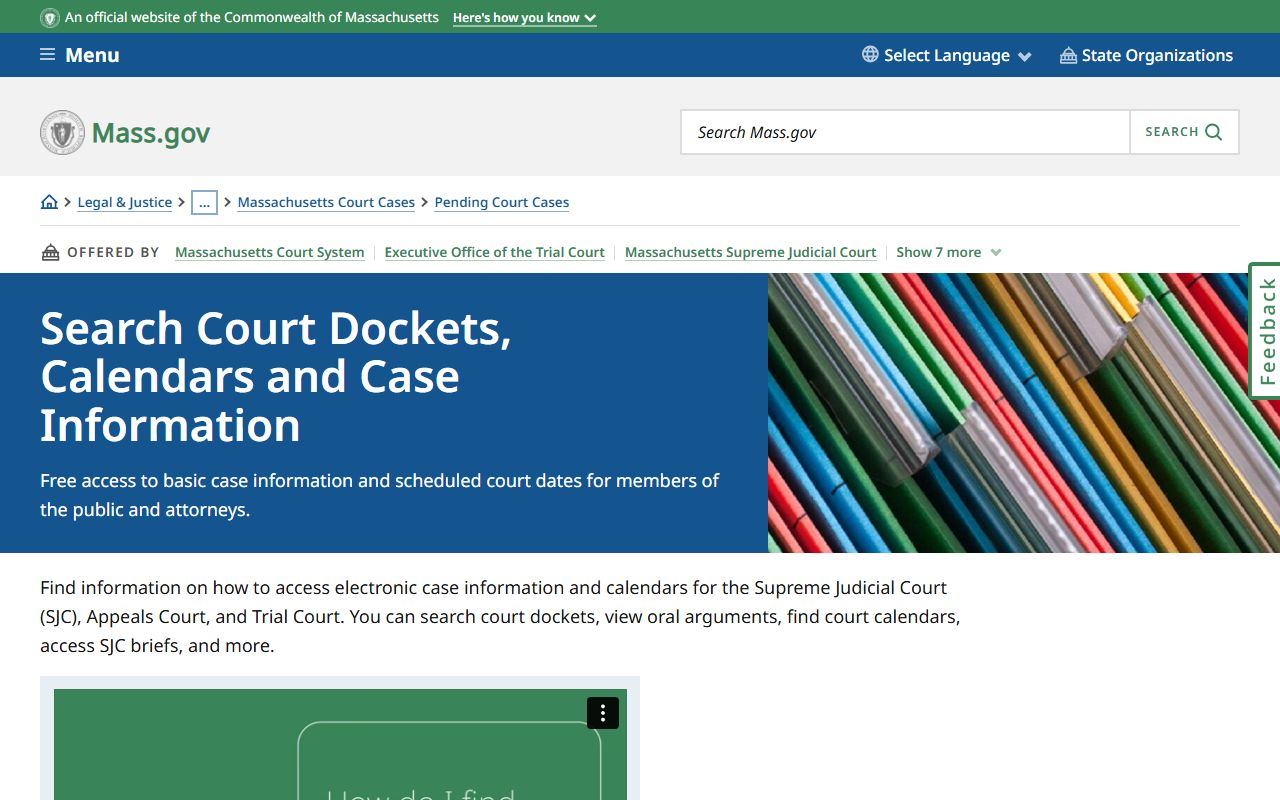
To search, you need at least a last name. First name helps narrow things down. You can also filter by case type and pick "Domestic Relations" to see only divorce cases. The system shows results from every Probate and Family Court in the state. Records from 2009 on are most likely to show up. Older cases may not be in the system. The court docket search guide walks you through each step and explains how to read your results.
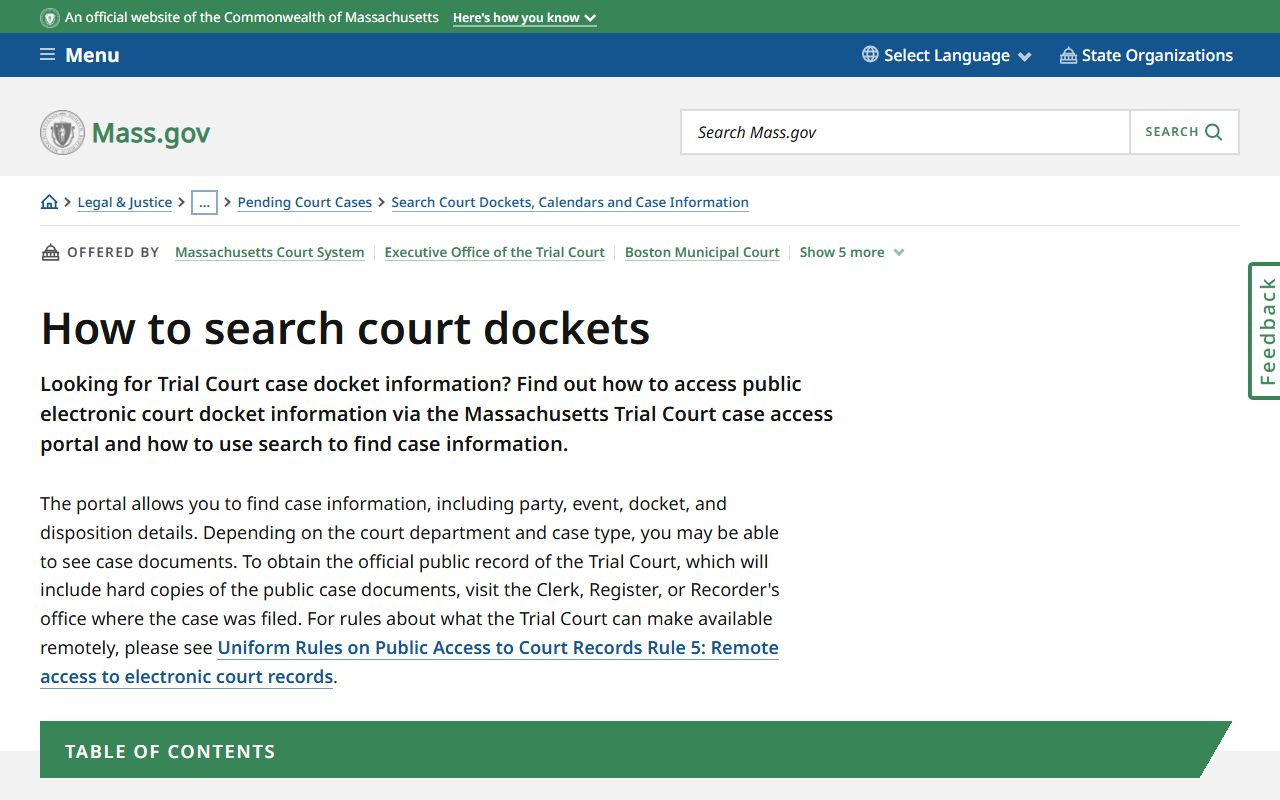
Each search result shows the case number, the names on file, the court division, and the current status. You can click into a case to see the full docket. Online records are for reference only. They do not replace certified copies. If you need an official document, you still have to go to the court or send a written request.
Massachusetts Probate and Family Court
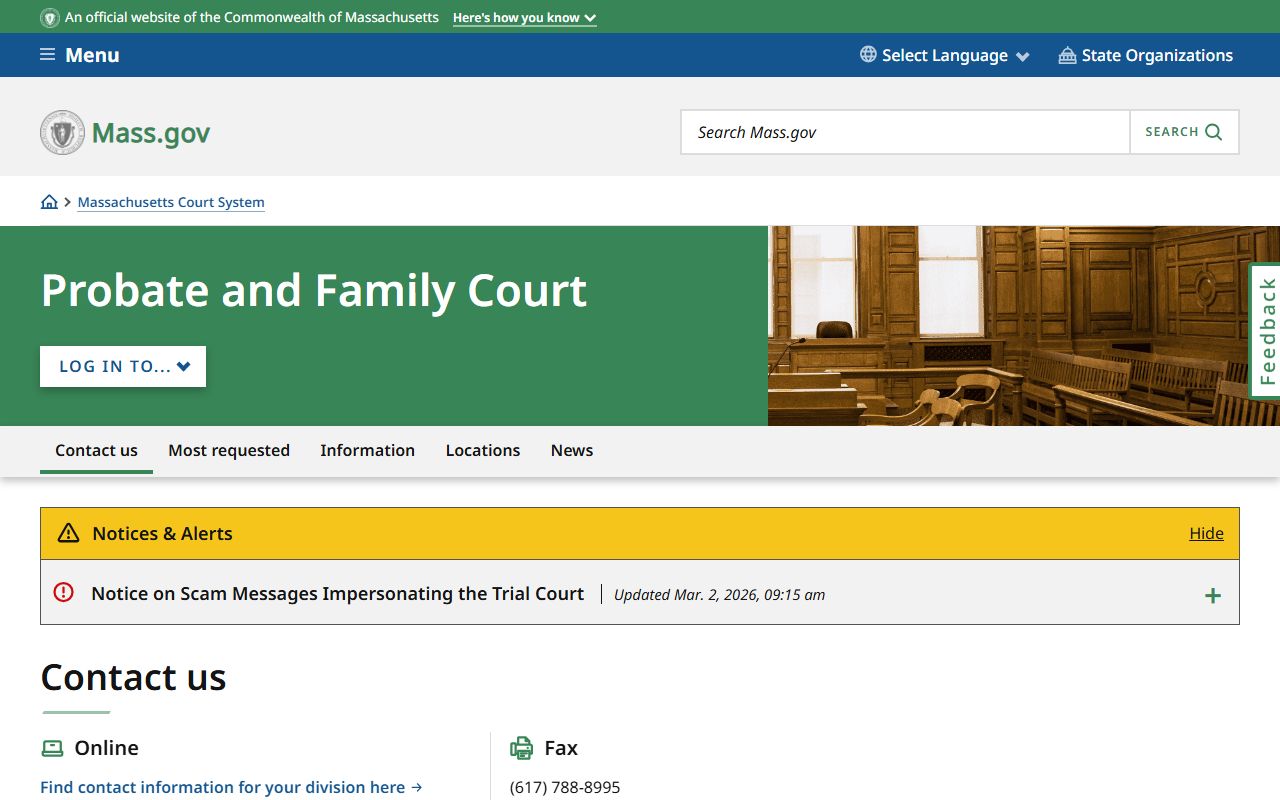
All divorce records in Massachusetts are held by the Probate and Family Court. This is a division of the Massachusetts Trial Court. Every county has its own Probate and Family Court, and that is where divorces are filed, heard, and stored. The court handles not just divorce but also custody, support, guardianship, and name changes. For divorce records, you go to the court in the county where the case was filed.
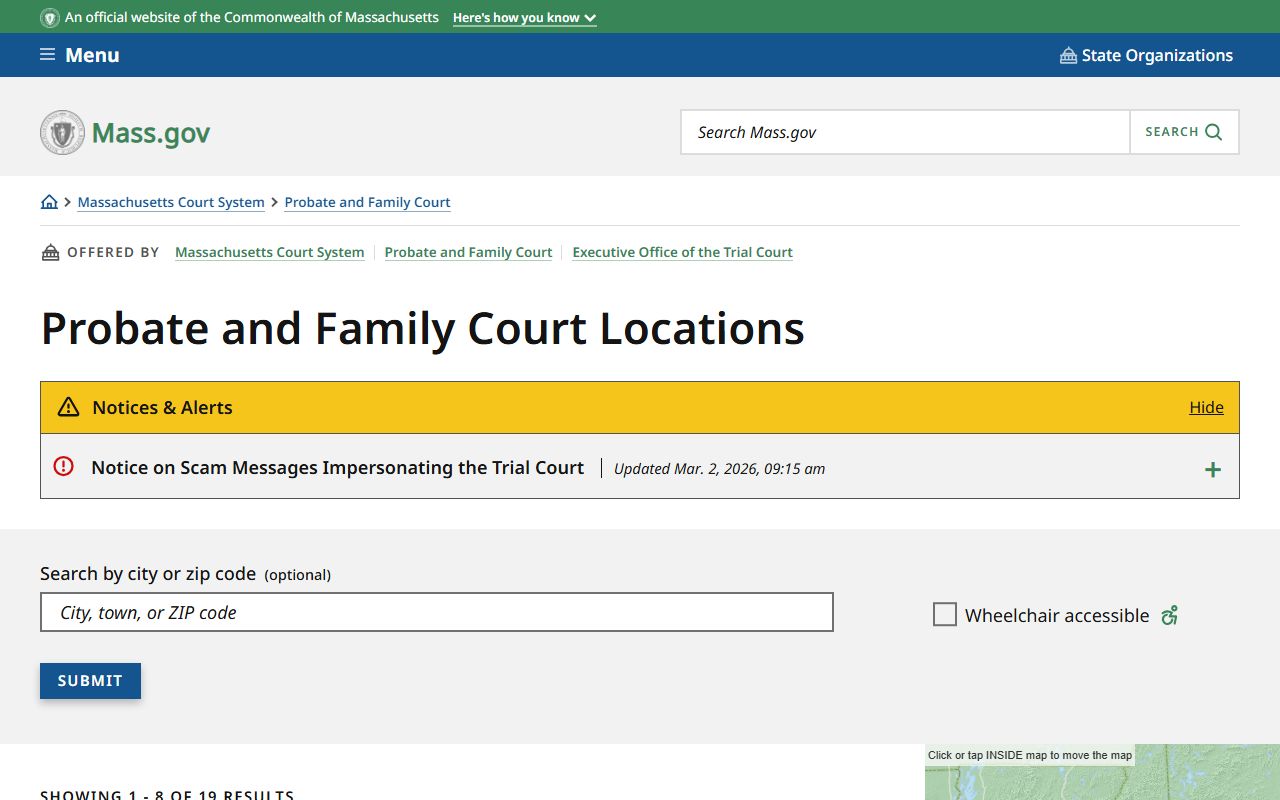
Massachusetts has 14 counties. Some of the bigger ones have more than one courthouse location. Middlesex County, for example, has a North office in Lowell and a South office in Woburn. Plymouth County runs locations in both Plymouth and Brockton. Bristol County has offices in Taunton, Fall River, and New Bedford. The full list of Probate and Family Court locations on mass.gov shows every office address, phone number, and the towns each one serves.
Divorce records stay at the court permanently. Case files are kept for 20 years from the judgment date, but the divorce decree itself is never destroyed. If a case is very old, the court may need to pull it from archives, which can take extra time.
Note: The Registry of Vital Records and Statistics does not hold divorce records in Massachusetts, only an index with court name and docket number.
Copies of Massachusetts Divorce Records
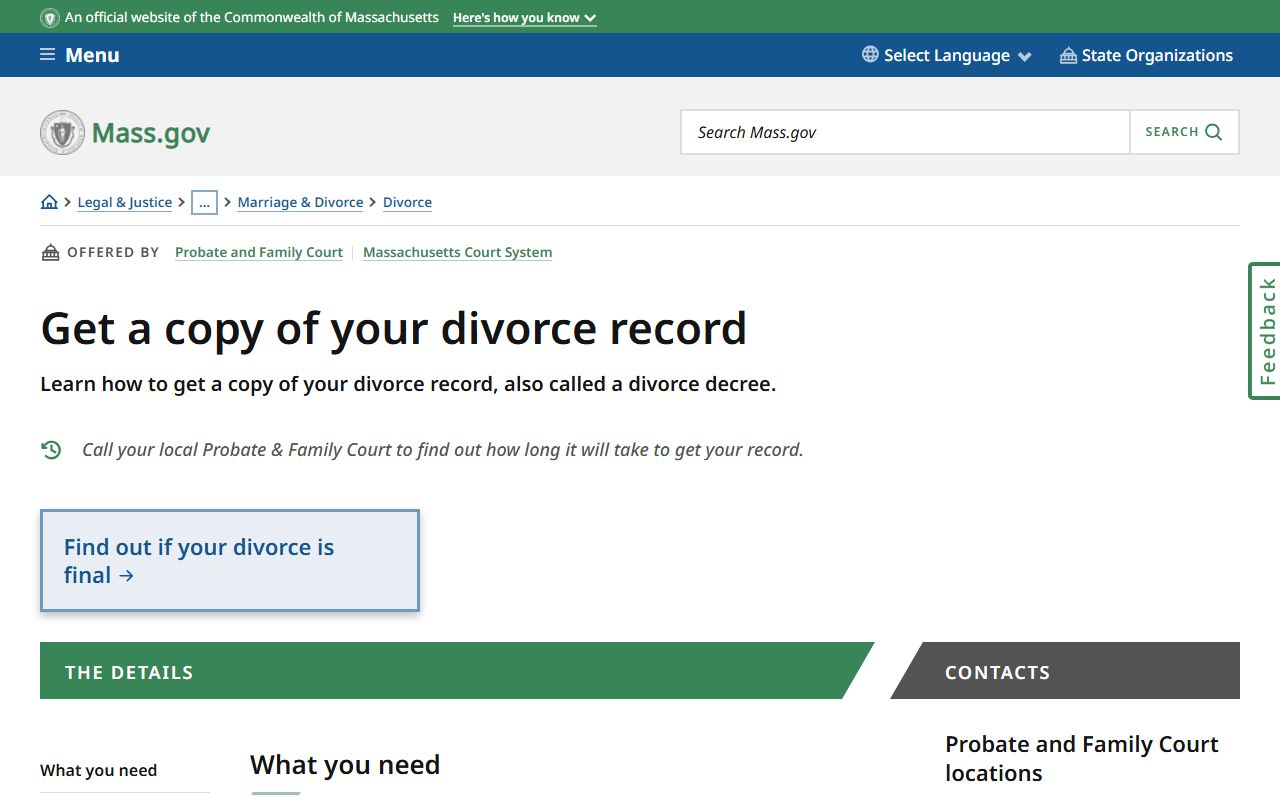
Getting a copy of a divorce record in Massachusetts means going through the Probate and Family Court where the case was filed. The official guide to obtaining divorce records on mass.gov explains the full process. You will need to know the docket number or at least the names of the parties and the approximate year. The court can look up a case and make copies for you.
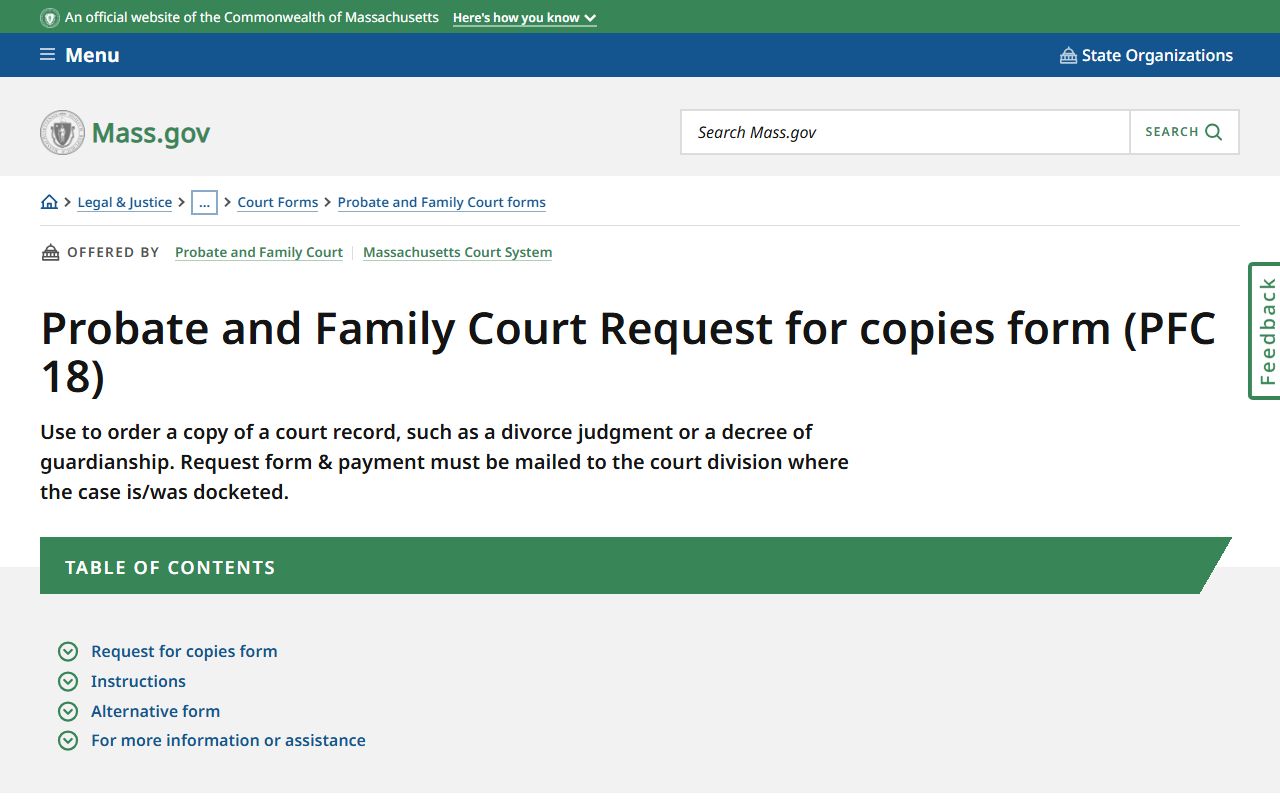
The main form for requesting copies is the PFC 18. This is the Probate and Family Court Request for Copies form. You fill in the docket number, the case name, what type of document you want, and where to send it. A Certificate of Divorce Absolute costs $20. A certified copy of the Judgment of Divorce Nisi is also $20. Separation agreements run $20 for the first page plus five cents per extra page. You can submit the form in person or by mail. Some courts accept requests through their Virtual Registry. The PFC 18 request form page has a downloadable copy.
Payment goes to the Commonwealth of Massachusetts. Courts accept money orders, bank certified checks, and attorney's checks. Personal checks are only accepted from attorneys. Credit cards work at some counters. If you cannot pay, you can file an Affidavit of Indigency to ask for a fee waiver.
Divorce Records Forms in Massachusetts
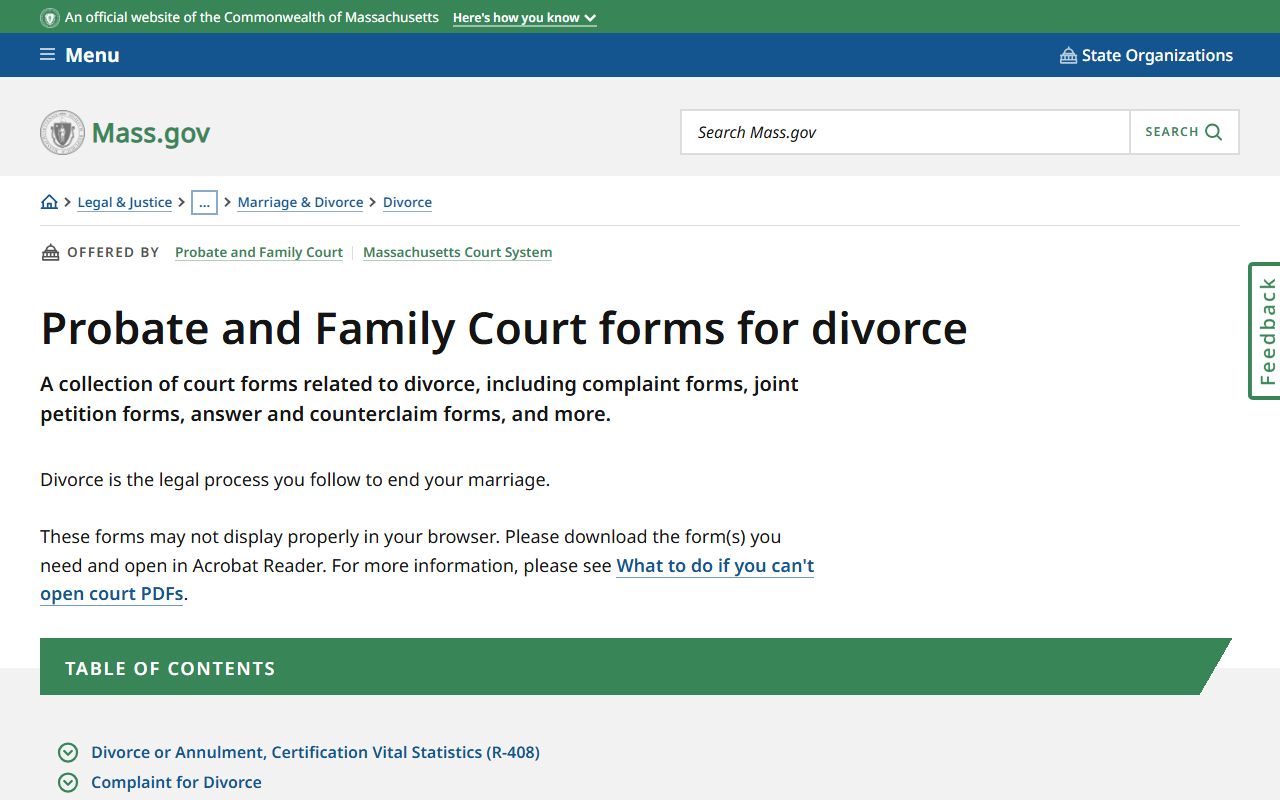
Massachusetts makes all divorce forms free to download. The Probate and Family Court divorce forms page lists every form you might need. This includes the Joint Petition for Divorce (1A), the Complaint for Divorce (1B), financial statements, separation agreement templates, and child support worksheets. If you are looking for a specific court record rather than filing forms, you want the PFC 18 mentioned above.
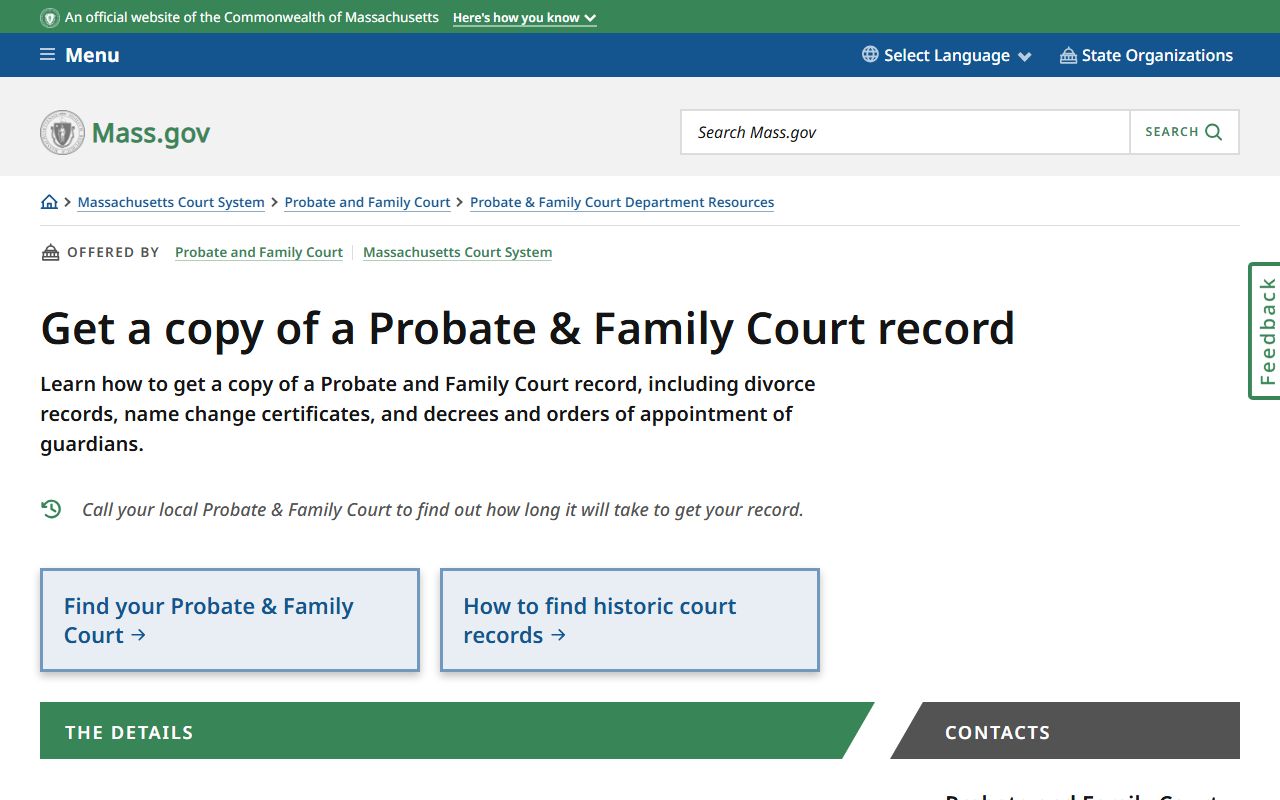
The Probate and Family Court records guide on mass.gov explains what documents are in a typical divorce case file. A complete file usually holds the complaint or joint petition, the separation agreement, financial statements from both sides, any motions filed during the case, and the final judgment. All of these are part of the divorce record.
Massachusetts Divorce Laws
Massachusetts divorce law falls under MGL Chapter 208. This chapter sets the rules for who can file, where to file, what grounds apply, and how the court divides property. Under M.G.L. c. 208 sections 1A and 1B, either spouse can file for a no-fault divorce based on irretrievable breakdown of the marriage. Section 1A is a joint petition where both spouses agree. Section 1B is a complaint filed by one spouse when the other does not agree. Fault grounds under section 1 include adultery, desertion for one year, cruel and abusive treatment, and habitual intoxication.
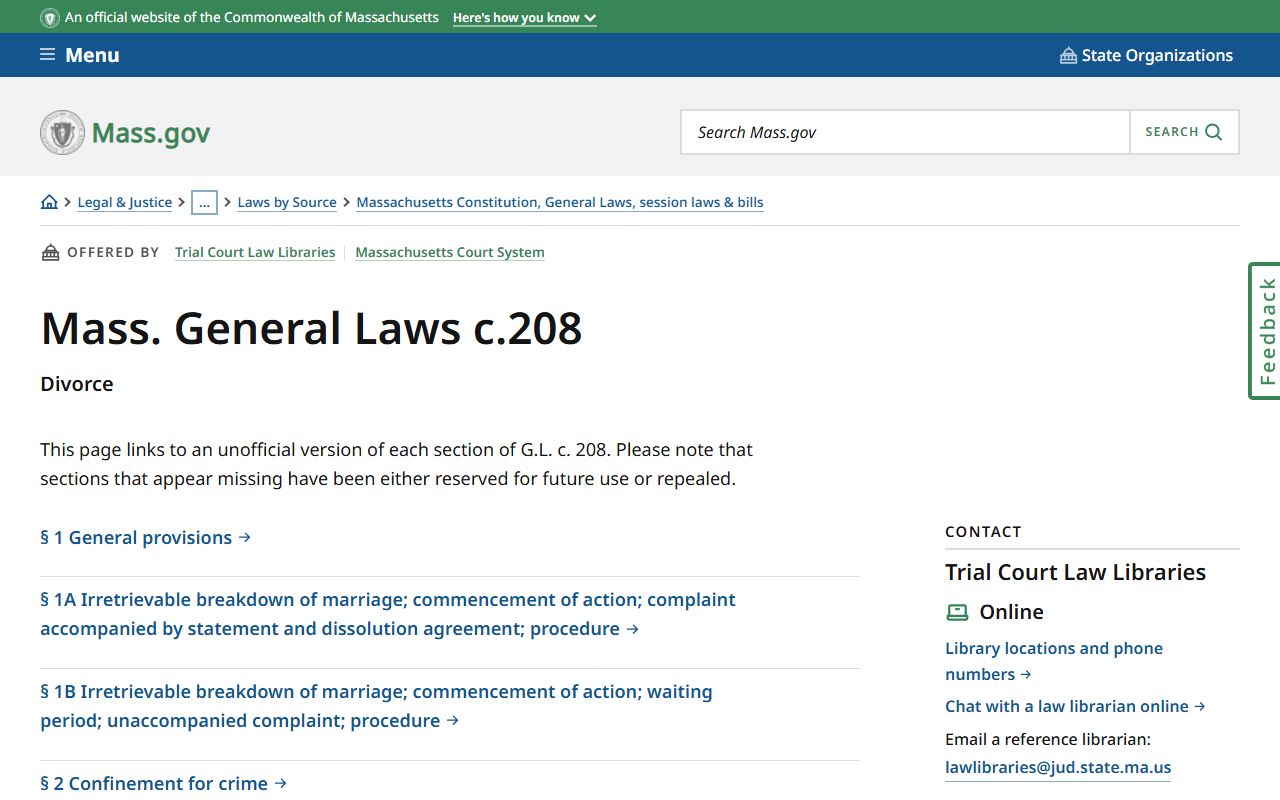
Residency matters. Under sections 4 and 5, if the reason for the divorce happened outside Massachusetts, the person filing must have lived in the state for at least one year. If the grounds arose here, there is no minimum wait as long as one spouse still lives in the state. You file in the county where one of you lives.
A divorce is not final right away. Under section 21, the court first enters a judgment of divorce nisi. For joint petitions, there is a 120-day wait. For contested cases, the wait is 90 days. Only after this nisi period ends does the divorce become absolute. The Certificate of Divorce Absolute under section 24A lists the parties' names, the date, the docket number, and the court division. Section 34 governs how property gets split. Massachusetts is an equitable distribution state, so the court divides assets fairly based on factors like length of marriage, income, and each person's contributions.
RVRS and Divorce Records
The Registry of Vital Records and Statistics handles birth, death, and marriage records in Massachusetts. It does not hold actual divorce records. What the RVRS does have is an index that can tell you which Probate and Family Court handled a divorce and what the docket number was. This index goes back to 1952. For divorces since 1926, they can provide the court name and docket number. The RVRS divorce information request page explains how to submit an inquiry if you do not know where a divorce was filed.
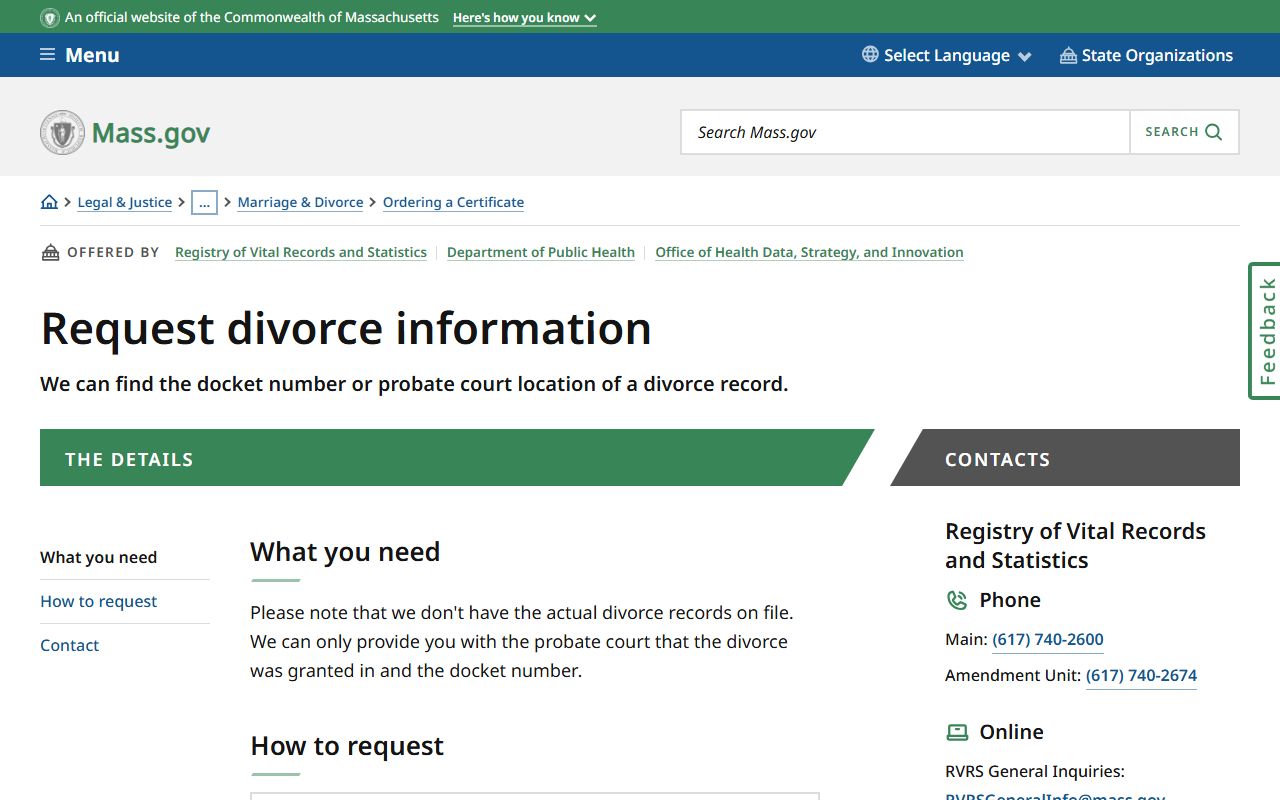
Once you have the docket number from the RVRS, you take that to the correct Probate and Family Court to get copies of the actual divorce records. The RVRS office is at 150 Mount Vernon Street in Dorchester. Their phone number is (617) 740-2600.
Public Access to Divorce Records
Divorce records are public in Massachusetts. Anyone can ask to see them. You do not have to be one of the parties in the case. You do not need a reason. The Probate and Family Court will let you look at most of the file and make copies for a fee.
Some limits do apply. Financial statements filed during a divorce may have restricted access. Details about minor children can be sealed or redacted under Supreme Judicial Court Rule 1:24. Social Security numbers and bank account numbers are automatically removed from electronic records. A party can ask the court to impound parts of the file if there are safety concerns or sensitive information. Impounded records are not common but they do happen. For most people searching Massachusetts divorce records, the judgment, separation agreement, and docket entries are all available.
Legal Help and Divorce Resources
If you need help with a divorce case or finding records, several organizations in Massachusetts offer free or low-cost services. MassLegalHelp has step-by-step guides for people filing on their own. The Massachusetts Legal Resource Finder matches you with legal aid based on your location and situation. Mass Legal Services lists organizations across the state that handle family law cases for low-income residents.
Court Service Centers are available at several courthouses around the state. Staff can help you fill out forms and explain your options. They do not give legal advice but they can point you in the right direction. The centers in Boston, Brockton, Springfield, Worcester, and Lawrence serve people from any county.
Note: Court Service Center staff can help with forms but cannot give legal advice or represent you in court.
Browse Massachusetts Divorce Records by County
Each county has its own Probate and Family Court that stores divorce records. Pick a county to find local court contact info, hours, and how to get copies of divorce records in that area.
Divorce Records in Major Massachusetts Cities
Residents of major cities file for divorce at their county's Probate and Family Court. Pick a city to learn about divorce records access in that area.